
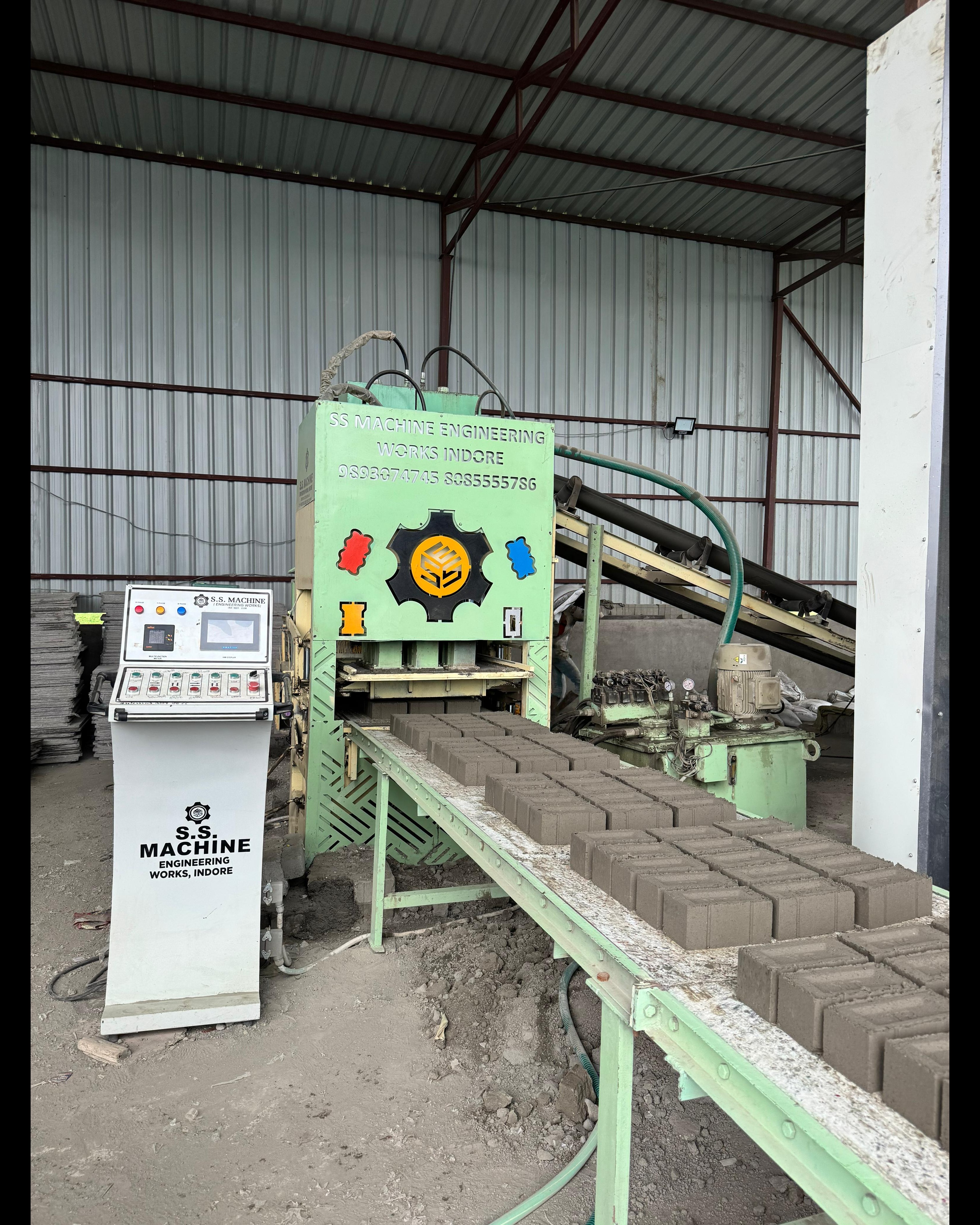
How Many Bricks Can a Fly Ash Brick Making Machine Produce Per Day?
Daily production depends on several factors, including the number of bricks formed per cycle, the machine's cycle time, operating hours, material feeding, handling speed, labour and downtime.
For example, a six-cavity machine can form six bricks in one cycle if the selected mould and operating configuration support six bricks per cycle. However, this does not by itself determine the number of saleable bricks produced per day.
Before making an investment, ask the manufacturer for:
- Bricks produced per cycle
- Demonstrated cycle time
- Recommended operating hours
- Expected downtime and maintenance requirements
- Supporting equipment requirements
- Practical output under comparable working conditions
Use achievable production estimates when preparing your business plan rather than relying solely on the maximum advertised capacity.
How to Choose the Best Fly Ash Bricks Making Machine
Choosing a suitable machine requires a comparison of technical performance, production needs and total ownership costs.
1. Define your production target
Estimate your expected daily demand and the number of saleable bricks required. Select a machine configuration that can support this target under realistic operating conditions.
2. Compare automation levels
Consider how much manual involvement your business can accommodate. A more automated machine may reduce certain labour requirements but can also increase initial investment and maintenance complexity.
3. Check mould compatibility
Confirm that the machine can produce the brick sizes and shapes your customers require. Ask about mould changes, replacement costs and dimensional consistency.
4. Evaluate raw material requirements
Fly ash quality and other raw material characteristics can vary. Discuss the intended mix and conduct trial production where possible before finalising your machine selection.
5. Assess power and space requirements
Check the machine's electrical load, foundation requirements, working area, material storage and space needed for curing and finished-brick handling.
6. Verify after-sales support
Ask about installation, operator training, warranty coverage, spare parts and service availability. Obtain important commitments in writing.
7. Compare the complete project cost
Include the machine, mixer, conveyor, moulds, installation, electrical work, curing facilities, transport, labour and working capital.
The lowest machine price does not necessarily mean the lowest overall operating cost.